


If you’ve heard of a rule of life, you may think it’s another example of self-optimization. Customize your life. Choose behaviors that lead to the outcomes you’re looking for.
Some argue that building a rule of life is trendy, individualistic, and indulgent. There’s some truth in these criticisms: with the wrong approach, building a rule of life can lead to a greater focus on self, and can act as another attempt at self-improvement through our own efforts.
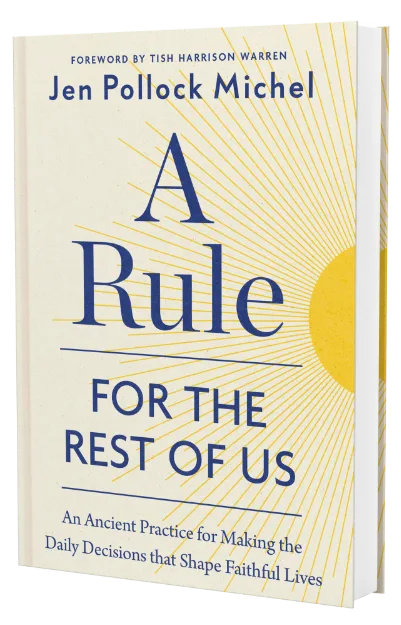
Done right, however, a rule of life can help us build habits of faithfulness that lead to a greater love of God and others. In her new book, A Rule for the Rest of Us, Jen Pollock Michel provides a method for steering clear of the pitfalls associated with a poor rule of life. She shares insights on how a rule can assist us in abiding in Christ, persevering in our obedience, and living faithfully with God.
Defining a Rule
A Rule, according to Michel, is “the practice of regular habits to sustain creative, faithful response to God's loving voice.” The word rule comes from the Latin word regula. This shows that a rule of life isn’t just about following strict rules. Instead, it is about making our love for God, our love for others, and our love for ourselves regular goals in our daily lives.
A rule isn’t just about doing more, trying harder, and working longer. It also helps us say no to “unnecessary clutter and unreflective busyness.”
We each already have a rule of life, a set of habits and practices we follow that shape the person we’re becoming. Michel wants to help us become more intentional in choosing habits rather than drifting. She wants to help us meet God in our lives and grow in our faithfulness and endurance in a realistic and hopeful way.
Before You Build a Rule
I expected Michel to introduce the idea of a rule of life, and then to begin to help us build one. But Michel knows where this would lead: to a rule that would last as long as a New Year’s resolution. To build a rule that will work, we need to prepare ourselves first.
The book leads us through three important steps before we begin to write a rule.
First, keep company with God. Establish essential practices that cultivate ongoing conversation with God. Helpfully, Michel focuses on three key habits that are essential for all believers. She keeps us focused on what matters most rather than leaving us overwhelmed.
Second, name your givens. Assess your season, roles, and limitations. This section helps us ensure that our rule is realistic rather than an aspirational statement that will leave us defeated.
Third, attend to your desires. Examine what your heart truly longs for, both good and bad. In this stage, we’re confronted with choices about good desires and how they will fit into our already full lives, as well as the habits of sin that need to be changed.
I’m grateful for these preparatory steps. Without taking them into account, any rule we write would be less tethered to both the truth of God’s word and our own particular lives and needs.
Building and Revising Your Rule
In step 4, Michel helps us begin writing our rule by articulating faithful habits. She calls us to both put off what isn’t helpful and to put on what is. Writing a rule can be intimidating, so Michel gets practical and gives us some examples of what it can look like.
Step 5 involves reviewing and revising the rule. We’re unlikely to keep a rule if we don’t review it; we’re unlikely to get the rule exactly right the first time, and even if we did, our lives are fluid. It’s helpful, then, to regularly revise the rule to fit the reality of our lives.
Until our resurrection, we will always be in process. We need God’s help at every stage. We will struggle and fail. But choosing intentional habits and building them in a realistic way into our lives can sustain us as we continue to follow him.
You don’t need to build a rule of life. It isn’t a biblical command. But there’s wisdom in thinking about the kind of habits that will help you live faithfully and enjoy God. For that reason, I’m grateful for Michel’s book. It’s a helpful guide to building habits of faithfulness that will help us love God and others well, even in the complexity of our everyday lives.
More from Amazon.com | JenPollockMichel.com


